₦126,000 ₦151,200
Anti Rho-D Immunoglobulin (often referred to as RhoGAM or Anti-D) is a highly specialized sterile solution of antibodies specifically engineered to prevent Rhesus (Rh) sensitization. It works by providing passive immunity: the injected antibodies identify and "mask" any Rh-positive red blood cells that may have entered an Rh-negative person's bloodstream (usually from a fetus or a mismatched transfusion). This prevents the person's own immune system from recognizing these cells and producing its own permanent antibodies, which could otherwise attack the red blood cells of a future Rh-positive baby, a condition known as Hemolytic Disease of the Newborn (HDN).
Product Type: Blood Product / Passive Immunizing Agent
Active Ingredient: Human Anti-D Immunoglobulin (300mcg / 1500 IU)
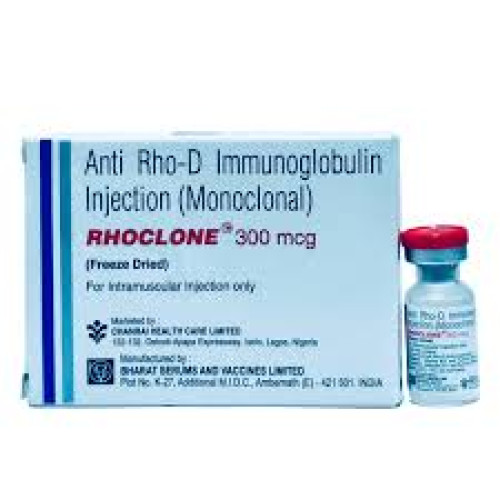
Common Brands in Nigeria: RhoGAM, Rhoclone, Immunorho, Rhophylac
Form: Pre-filled Syringe (PFS) or Lyophilized Powder for Reconstitution
Route: Intramuscular (IM) Only (Note: Some brands like Rhophylac are IV/IM compatible; check the specific insert)
Availability: Strictly Prescription Required (POM) — Administered by a doctor or nurse
Suitable For: Rh-negative women who are pregnant with or have delivered an Rh-positive baby
This injection is a critical standard of care in obstetrics and hematology:
Routine Prenatal Prophylaxis: Administered at 26–28 weeks of pregnancy to protect against "silent" fetal-maternal hemorrhages.
Postpartum Prevention: Given within 72 hours of delivery if the newborn is confirmed to be Rh-positive.
Pregnancy Complications: Administered after a miscarriage, ectopic pregnancy, abortion, or abdominal trauma where blood mixing might occur.
Invasive Procedures: Used after amniocentesis or chorionic villus sampling (CVS).
Incompatible Transfusions: Preventing sensitization in an Rh-negative person accidentally given Rh-positive blood.
Not for the Baby: Anti-D is for maternal administration only. It must never be injected into the newborn infant. Sensitivity Check: It should only be given to women who are not yet sensitized (i.e., they do not already have their own anti-D antibodies). Live Vaccines: Anti-D can interfere with the effectiveness of live vaccines (like Measles, Mumps, or Rubella). If you need a vaccine, wait at least 3 months after your last Anti-D injection. Allergic History: Use with extreme caution if you have an IgA deficiency, as this increases the risk of a severe allergic reaction (anaphylaxis). Observation: Patients should be observed for at least 20 minutes post-injection for any signs of an adverse reaction.
For maximum efficacy, the timing of the injection is the most critical factor.
Standard Dosage:
Routine Dose: One 300mcg (1500 IU) injection is a "full dose," capable of neutralizing approximately 15ml of Rh-positive red blood cells.
Timing: Must be administered as soon as possible, ideally within 72 hours of the sensitizing event (delivery or trauma).
Application Tips:
Injection Site: Usually given deep into the muscle of the upper arm (deltoid) or the buttock.
Cold Chain: The medication must be brought to room temperature shortly before injection to reduce discomfort.
Blood Testing: The baby's blood type and the "Kleihauer-Betke" test (to measure the amount of fetal blood in the mother's system) are often performed to see if more than one 300mcg dose is required.
Common side effects are generally mild and include localized pain, redness, or swelling at the injection site. Some patients may experience a slight, temporary fever or body aches. Serious allergic reactions are rare. If you experience hives, difficulty breathing, or swelling of the face, seek immediate medical attention.
Anti Rho-D is a biological product and is extremely sensitive to temperature changes.
Refrigeration: Store between 2°C and 8°C. Do not freeze. Freezing destroys the antibody proteins.
Light Protection: Keep the syringe or vial in its original carton to protect it from light.
Stability: Do not use if the solution is cloudy or contains visible particles.
Transportation: In Nigeria, ensure the product is transported in a validated cold box with ice packs to maintain its potency.
Q: If I miss the "72-hour" window, is it too late?
A: While 72 hours is the ideal window, the injection may still provide some benefit if given up to 10–28 days after delivery. Consult your doctor immediately if you have missed the window.
Q: Do I need it if my husband is also Rh-negative?
A: If both biological parents are strictly Rh-negative, the baby will be Rh-negative, and the injection is usually not required. However, doctors often give it as a precaution if the father's blood type is not 100% verified.
Q: Will it affect my "Future Pregnancies"?
A: Yes—positively! It is specifically used to save future pregnancies by ensuring your body doesn't develop antibodies that would attack a future baby's blood.
Q: Is it "Safe" since it's made from human blood?
A: Yes. Modern manufacturing uses rigorous screening and viral inactivation processes (like solvent-detergent treatment) to ensure it is safe from known viruses like HIV and Hepatitis.
Authentic Anti Rho-D 300mcg (RhoGAM or Rhoclone) is available at Sanlive Pharmacy. We maintain a stringent cold chain from the point of manufacture to delivery, ensuring that this life-saving medication remains at the required temperature to protect your future family.
Guaranteed original brands with verified batch numbers and long expiry dates.
Specialized cold-chain delivery across Lagos and major cities in Nigeria.
Expert guidance from pharmacists on the 72-hour administration protocol.
Licensed pharmacists available to coordinate with your hospital's blood bank.
Order Anti Rho-D 300mcg from Sanlive Pharmacy today to ensure a healthy future for you and your baby.
No reviews yet.
Login to write a review.
Related Products